How Can Glass Art Help Connect An Interior With An Outdoor Space?
14 September 2026
Glass is naturally suited to creating a visual connection between indoor and outdoor spaces. While windows, doors and glazed walls can bring in views and natural light, bespoke glass features can take this relationship further by introducing colour, texture and artistic detail.
Create a visual link between spaces
A carefully designed glass artwork can echo colours, shapes or patterns found in the surrounding landscape.
For example, a feature incorporating botanical forms could reflect planting in a garden, while flowing lines or translucent colours could complement water features or natural stone.
This approach helps an outdoor space feel like an extension of the interior rather than something completely separate.
Use light to bring spaces together
Natural light can dramatically change the appearance of architectural glass throughout the day. A glass feature positioned near a window, glazed entrance or internal courtyard can interact with changing sunlight, creating shifting reflections, shadows and colours.
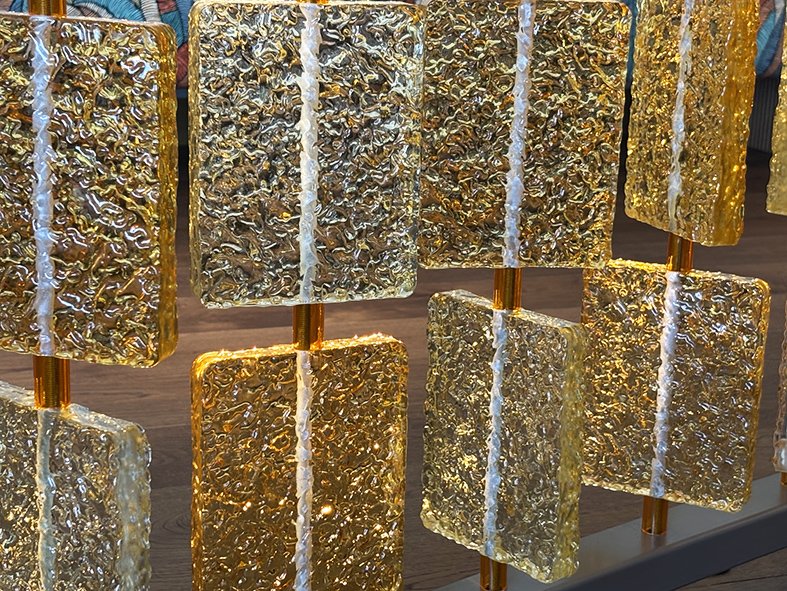 Daylight through the textured amber cast glass tiles of the screens at The BoTree hotel, London – the colour and sparkle shift as the light moves through the day
For architects and interior designers, this provides an opportunity to consider how a glass artwork will look at different times of day and from different viewpoints, rather than treating it simply as a static decorative feature.
Introduce a focal point
A bespoke glass screen, panel, wall feature or sculptural installation can create a visual focal point that draws the eye towards an outdoor area. This can be particularly effective in open-plan interiors, entrance spaces and rooms overlooking landscaped gardens.
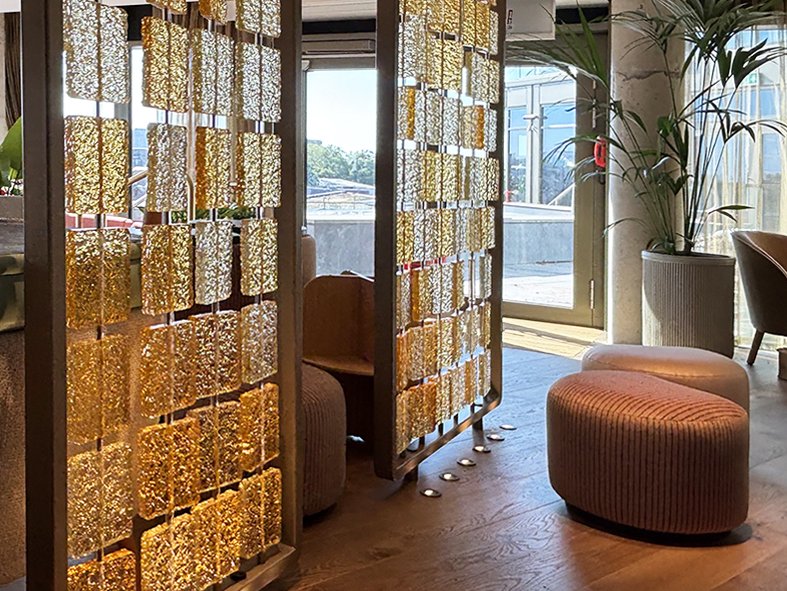 A cast glass screen at The BoTree hotel draws the eye through the restaurant to the terrace beyond
The glass does not necessarily have to copy the surrounding environment. A contrasting design can provide a deliberate transition between architecture and nature.
Consider the whole setting
The most successful indoor-outdoor glass features are considered as part of the wider architectural scheme. Orientation, available daylight, surrounding materials, views, planting and the intended use of the space can all influence the design.
With thoughtful planning, architectural glass can do more than decorate an interior. It can help create a continuous visual relationship between the built environment and the landscape beyond.
You can see this approach in our own work at The BoTree Hotel, Highgate Hill, Disneyland Paris and Lancelot Place.